


Miami Independent | Dr. Majid Rafizadeh | Aug. 20, 2022
On August 1, 2025, Reza Pahlavi unveiled what he describes as a roadmap for Iran’s future — a document allegedly crafted by experts under his supervision and disseminated through NUFDI, his promotional apparatus. Marketed as a post-regime transition plan, it reads less like a democratic blueprint and more like a manual for consolidating unchecked power in the hands of a single unelected figure.
At the heart of the proposal lies an 18-to-36-month “Transitional Period,” which can be extended indefinitely. During this time, all branches of state authority would report to one man: the self-appointed “Leader of the National Uprising,” Reza Pahlavi. The proposed “Transition System” comprises three entities — the National Uprising Body, the Transitional Government, and the Transitional Court — which, while superficially resembling the legislative, executive, and judicial branches, are in practice entirely subordinate to Pahlavi. He would appoint, oversee, and dismiss all members of these bodies at will, with no institutional constraints.
The so-called legislative arm, named Mahestan, is a hand-picked advisory council that echoes the aristocratic assemblies of ancient Iran — unelected and elite. The executive branch, including the head of government and all ministers, would be selected by Pahlavi and his inner circle. Even the judiciary would be shaped by his influence, with the chief judge nominated by his legislature and confirmed by him personally. In essence, the plan offers no elections, no checks and balances, and no independent judiciary — only the centralization of authority under one man.
Rather than dismantling the regime’s repressive infrastructure, the plan seeks to preserve and rebrand it. The Ministry of Intelligence would remain intact. IRGC personnel would be repurposed into “vetted” units, and anti-riot forces, the very tools of today’s brutal crackdowns, would be retained for “crowd control.” In twenty cities deemed “high risk,” martial law would be imposed, and a newly created “special unit” with sweeping powers would report directly to Pahlavi, bypassing all bureaucratic oversight and civilian accountability.
The promise of transitional justice is equally hollow. Even accountability for crimes against humanity would be subject to a referendum, a mechanism that could easily be manipulated to shield perpetrators rather than hold them to account. Crucially, the plan assumes the regime has already collapsed, yet offers no viable domestic strategy to achieve that outcome. It is not grounded in an organized grassroots movement but rather in the political resurrection of a hereditary figurehead, buoyed by foreign support. This model is neither sustainable nor democratic; it sidelines the very people whose uprising would be essential to any genuine transition.
Ethnic and national minorities are conspicuously absent from the plan’s vision. There is no mention of decentralization, cultural autonomy, or linguistic rights. Instead, “separatism” is framed as a security threat to be managed militarily, reinforcing a centralized and exclusionary state structure that ignores Iran’s rich diversity.
By design, the plan grants Pahlavi absolute control over the executive, legislative, and judicial functions for a minimum of three years, with the possibility of indefinite extensions. This is not the architecture of a democracy-in-waiting; it is the scaffolding of authoritarian rule, cloaked in the language of transition. Its resemblance to the current regime is striking: a single leader at the apex, loyalist appointees across all branches, security forces shielded from reform, and no guarantees of press freedom or protest rights. In some respects, it surpasses the clerical regime in its centralization, dispensing even with the limited public participation permitted under Iran’s existing constitution.
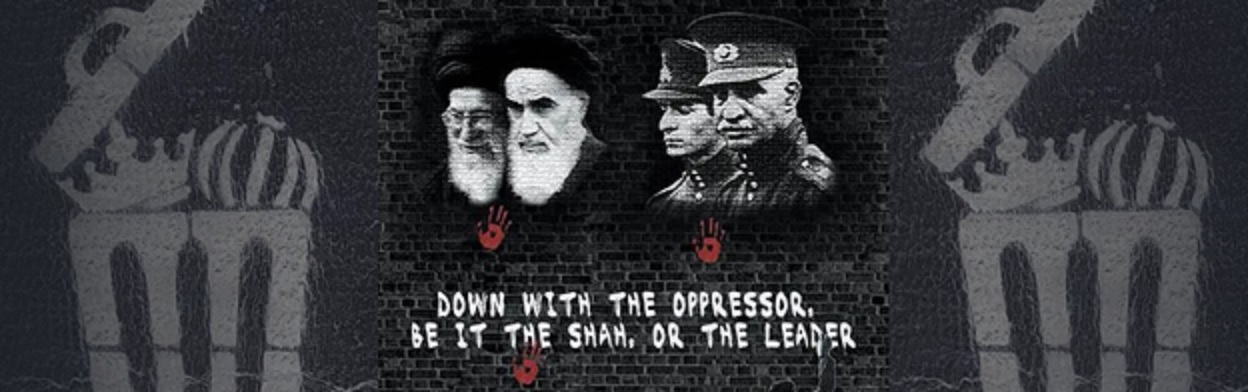
Democracy does not begin with a supreme leader, whether in a turban or a tailored suit. It begins with the organized will of the people, independent institutions, and enforceable limits on state power. Pahlavi’s plan offers none of these. Instead, it promises absolute rule for at least three years, the preservation of the regime’s coercive apparatus under new names, a direct security agency accountable only to the leader, and the continuation of existing laws until further notice.
Call it monarchy. Call it neo-fascism. Call it what you will. But do not call it democracy.
Dr. Rafizadeh is a Harvard-educated political scientist and alumnus. He holds a Ph.D. in Government and International Affairs, Master’s degrees in Global Politics, Journalism, and Linguistics. You can follow him on @Dr_Rafizadeh
This Op-Ed is adapted from an analysis by Dr. Majid Rafizadeh, originally published by the Free Iran Scholars Network.