

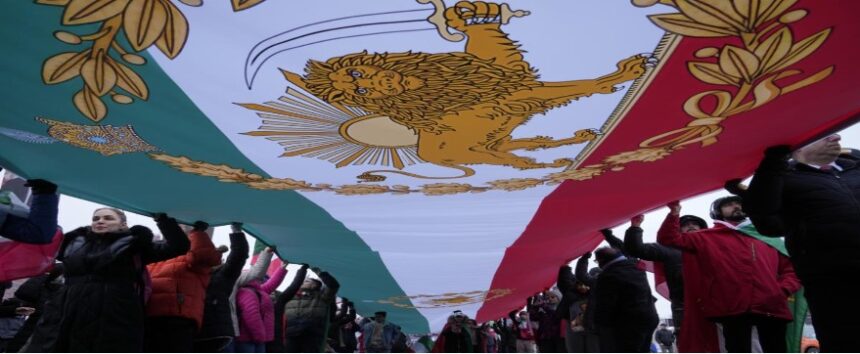
Why Washington Must Reject Reza Pahlavi’s Call for War
Real Clear Defense | By Gen. Charles Wald (Ret.) | February 19, 2026
For most Americans, particularly those exhausted by two decades of war in the Middle East, Iran represents a persistent and complex geopolitical challenge. The Iranian regime has American blood on his hands, which could justify ending many years of restraint and launching a devastating strike against the Islamic Revolutionary Guard Corps (IRGC). The bloody crackdown on the wave of protests in Iran and the ensuing carnage with thousands being killed, many more injured and tens of thousands being arrested, further call for action from a moral perspective notwithstanding the possible political outcome of helping the Iranian people and triggering another wave of protests to overthrow the regime.
However, any military intervention will also have its downside, for which it seems that president trump is acting prudently. Thus, a well-defined objective is a must, and a possible scenario must be fully considered.
For all these reasons, this is an American issue that ultimately the president should decide. What is seriously troubling is strong lobbying by Reza Pahlavi, the son of Iran’s deposed shah for US military intervention in Iran. In recent months, however, and with growing intensity in just the past few weeks, he has abandoned the language of nonviolent civil resistance in favor of openly advocating American and Israeli military action. He is no longer merely positioning himself as an opposition figure; he is actively lobbying to become the beneficiary of a foreign military intervention, at the expense of the American taxpayer.
We have seen this movie before. And we know how it ends.
Pahlavi’s recent media blitz leaves little ambiguity about his intent. In a speech at the National Press Club on January 16, he called on the United States to carry out a “surgical strike” against the regime’s military and paramilitary infrastructure. That same day, he told the BBC that targeting the leadership of the Islamic Revolutionary Guard Corps would “facilitate regime change” and prevent further loss of life.
The rhetoric has only intensified. On January 20, in an interview with Fox News, Pahlavi declared that a “definitive strike” by the United States, Israel, or “whatever” force was necessary to tip the balance against the regime. Three days later, during a CNN appearance, he reiterated his call for U.S. airstrikes to remove Iran’s government.
This is not a momentary lapse in judgment or an isolated misstatement. It is a sustained, calculated campaign. In a June 27, 2025, op-ed for USA Today, Pahlavi urged the international community to “end it once and for all,” arguing that war had exposed the regime’s vulnerabilities. Reporting by CBC has likewise documented his repeated endorsement of U.S.–Israeli strikes on Iran’s nuclear facilities, consistently pressing for “more action.”
Many argue that Pahlavi is acting in the same way as Chalabi did nearly a quarter century ago. He claimed to have support in Iraq and even engineered a coalition with a few other groups, many of them were closely guided by the Iranian regime. This is why there is serious concern among many in the US who in principle agree with a strike but want to make sure that it will not drag the US to another war, which President Trump has always strongly rejected.
That absence of organic legitimacy helps explain his strategic pivot. Unable, or unwilling, to pursue power through the arduous, dangerous work of organizing Iranian society under repression, he seeks instead to acquire it through foreign military force.
Pahlavi now appears to be following the same script as once Chalabi did. From the safety of exile, he urges the United States to assume military risks whose consequences he himself will never bear.
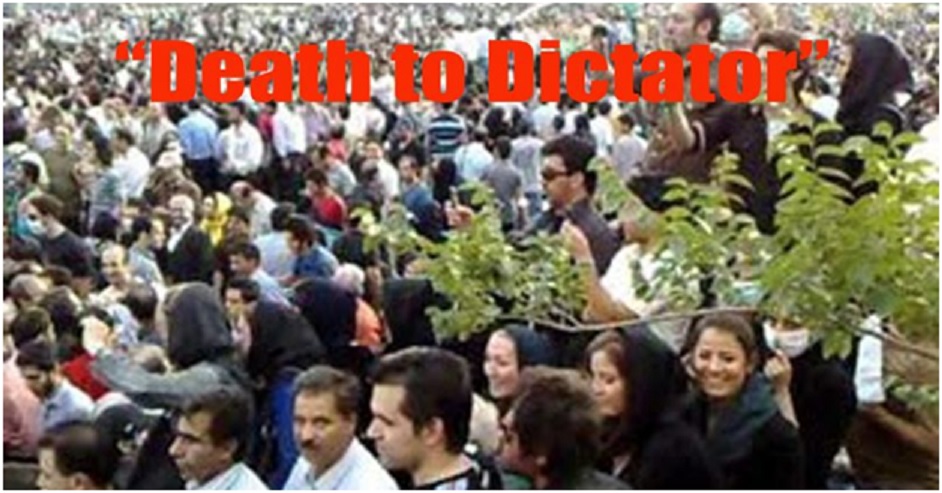
When an exile figure goes on American television to openly solicit U.S. airstrikes, he validates the regime’s propaganda and hands it a ready-made justification for intensified repression. The cost is paid not by him calling for war from abroad, but by ordinary Iranians protesting at home.
Rejecting Pahlavi’s call for war does not amount to an endorsement of the Islamic Republic. On the contrary he is playing into the hands of the Iranian regime. The regime in Tehran remains brutal, corrupt, and deeply repressive. The best for the US is to help the Iranian people.
Reza Pahlavi’s lobbying for U.S. military intervention has not only strengthened the regime’s claim that Iran lacks an authentic, homegrown popular movement, but by implying that the United States intends to impose him on the country, he has also fueled divisions among the Iranian people.
Whatever course of action the United States ultimately chooses, it is essential to declare publicly and unequivocally that it has no intention of installing the son of a deposed dictator as Iran’s future monarch. Regrettably, monarchist groups, through disinformation and empty propaganda, have cultivated this perception. It must be clearly corrected: this is not, and has never been, U.S. policy.
The question confronting American policymakers is not whether Iran deserves a better future—it unquestionably does. The real issue is whether the United States will once again allow itself to be guided by an exile seeking power through foreign intervention, or whether it will honor its own stated principles by aligning policy with the aspirations of the Iranian people for a free and democratic Iran—an outcome that is also indispensable to peace and stability in the region.
The only realistic and responsible path forward lies with the Iranian people themselves—above all, those prepared to bear the cost and make the sacrifices necessary to liberate their country and reclaim their future.
Gen Charles F. Wald (U.S. Air Force, ret.) was Deputy Commander of United States European Command (2002 – 2006).