

IBTimes | By Shahin Gobadi | 02/23/22
When I was a teenager in 1977, I watched from my middle-class home in western Tehran as Mohammad Reza Pahlavi hosted a state dinner for then-President Jimmy Carter. My family was firmly opposed to the Shah’s rule, but I enthusiastically watched Carter’s speech that New Year’s Eve, having learned a few things about the U.S. political system as a curious tourist to America the previous summer.
I was dumbfounded when, in the middle of his speech, Carter called Iran “an island of stability in one of the more troubled areas of the world.” I looked at my uncle and said, “What is he talking about? Who told him that? Americans really don’t know what is going on in Iran?”
My uncle went out of his way to tell me about the pervasive presence of Americans in Iran and tried to convince me that the president of the strongest country in the world definitely knew things that an Iranian teenager did not. A heated argument ensued, but I could not convince him of Carter’s mistake.
One early afternoon In September 1977, I was in a taxi coming home from my English class when the traffic came to a dead stop as a result of anti-government demonstrations by university and high-school students. I will never forget the first time I heard the chant “Down with the Shah” and saw glass strewn in the streets of central Tehran from the broken windows of government buildings.
Only 14 months later, on February 11, 1979, the monarchy was overthrown forever by a popular uprising that demanded democratic governance and safeguards on human rights for all Iranians. Sadly, that movement was soon co-opted by the theocratic faction under the command of Ruhollah Khomeini, and Iran ended up trading one form of dictatorship with another.
This week marks the 43rd anniversary of the Shah’s overthrow and the world is grappling to find a way to deal with the theocratic regime’s malign activities, including the drive to acquire nuclear weapons. I still cannot help but wonder how the international community failed to see the writing on the wall for the Shah’s regime and hear growing voices for his inevitable overthrow.
Fast forward 43 years.
Regardless of everything that has changed, current Western leaders seem every bit as confused about Iranian affairs as Carter was in 1977. Their naively optimistic and dangerously soft posture at the ongoing nuclear talks in Vienna, for instance, seems to imply that the regime’s hold on power is secure and that their own negotiating position is strong. To their detriment, the U.S., U.K., France and Germany are overlooking Iran’s internal situation, which even Iranian state media and security forces repeatedly describe as “explosive.”
Since the end of 2017, the Islamic Republic has been through eight uprisings, three of them nationwide, calling for a regime change. Protests by teachers, factory workers, and various other social groups are virtually daily occurrences now, and many of them feature the same anti-government slogans that defined the uprisings – slogans that are highly reminiscent of furor which preceded the Shah’s overthrow.
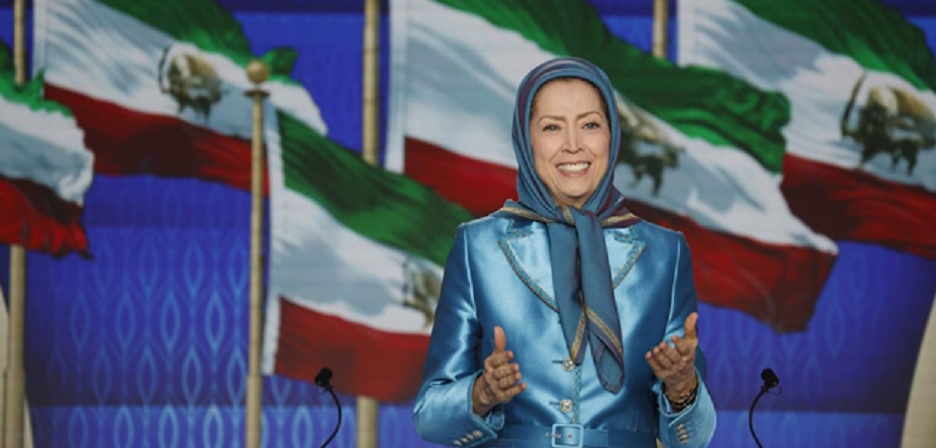
At the same time, activist known as “Resistance Units”, affiliated to the main Iranian opposition movement, the People’s Mojahedin Organization of Iran (PMOI/MEK), which played key role in the uprisings, have stepped up its activities throughout the country and regularly torch the images of the current leadership and post images of the NCRI’s President-elect Maryam Rajavi, who stands ready to assume leadership of a transitional government in the aftermath of the theocracy’s overthrow.
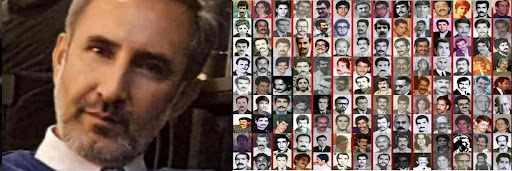
In order to stem the tide, in June the regime’s supreme leader installed as president Ebrahim Raisi, a cleric notorious for his role in past human rights abuses, including the massacre of 30,000 political prisoners in 1988. The outcome has not been what Khamenei wanted, and some recent unrest has squarely taken aim at Raisi.
History never repeats itself but it often rhymes. Iran of 2022 is very different from 2020 or 2021. In the era of social media and instant global transfer of news, there are too many writings on the wall about the fact that the mullahs are in deep trouble at home and besieged by an outraged population, in particular the youth and women, poised to take advantage of any opportunity to express their rage.
The clock is ticking towards another big change in Iran. The sooner the international community is up to the change, the better it can realign its policy for an Iran without the ayatollahs, at least a government of the people, for the people, and by the people.
Gobadi is a member of the Foreign Affairs Committee of the Paris-based National Council of Resistance of Iran (NCRI)
https://www.ibtimes.com/iran-cusp-historic-change-time-democracy-3405384
Tags: Iran, Policy, Nuclear, Main Opposition