

NBC NEWS | May 9, 2019 | By Courtney Kube
Intelligence revealed Iran told some proxies and surrogates they could go after American military targets in the region, say 3 U.S. officials.
WASHINGTON — The U.S. decision to surge additional military forces into the Middle East was based in part on intelligence that the Iranian regime has told some of its proxy forces and surrogates that they can now go after American military personnel and assets in the region, according to three U.S. officials familiar with the intelligence.
The intelligence shows that an Iranian official discussed activating Iranian-backed groups to target Americans, but did not mention targeting the militaries of other nations, the officials said.
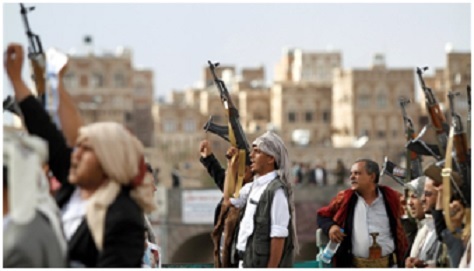
Among the specific threats the U.S. military is now tracking, officials say, are possible missile attacks by Iranian dhows, or small ships, in the Persian Gulf; attacks in Iraq by Iranian-trained Shiite militia groups; and attacks against U.S. ships by the Houthi rebels in Yemen.
The U.S. has accused Iran of moving missiles and missile components through the region’s waterways for years, shipping missiles to the Houthis in Yemen and others. And Shiite militia groups like Baghdad Katib Hezbollah (BKH) have been in Iraq for years, acting essentially as sleeper cells. What is new and what has alarmed U.S. military officials, sources say, is the call to awaken and activate these existing threats.
One U.S. official said Iran usually conceals the missiles and components when delivering them to the Houthis. These missiles are visible to overhead surveillance, leading to concerns Iran could attempt to launch missiles from the dhows. There are some indications they have mobile launchers on board, as well, one of the officials said.
The three officials say that in addition to learning that an Iranian official had discussed attacks on Americans, the U.S. began seeing the movement of Iranian and Iranian-backed forces in various places across the region, prompting the commander of U.S. Central Command, Marine Corps Gen. Frank McKenzie, to request additional forces move to the region.
On Sunday, Acting Secretary of Defense Patrick Shanahan approved the request to accelerate the deployment of the USS Abraham Lincoln Carrier Strike Group and a bomber task force to the region. National Security Adviser John Bolton announced the movement in a statement Sunday night.
A spokesperson for U.S. Central Command declined to provide detailed information on the threats.
“U.S. Central Command has seen recent and clear indications that Iranian and Iranian proxy forces were making preparations to possibly attack U.S. forces in the region,” said the spokesperson, Capt. Bill Urban. “This include threats on land and in the maritime. We are not going to be able to provide detailed information on specific threats at this time.”
“Make no mistake, we are not seeking a fight with the Iranian regime,” Gen. McKenzie said Wednesday during a speech at the Foundation for Defense of Democracies, a think tank that favors a tough U.S. posture toward Iran. “Any attack on U.S. interests will be met with unrelenting force.”
Despite the increase in U.S. military heft to the region, Iran has not slowed its movement of forces or changed its posture, according to the three U.S. officials.
Congressional Democrats say they are concerned the Trump administration is trying to provoke a wider conflict.
“The intelligence is real,” said a senior Democratic congressional official briefed on the intelligence, “but the response seems wildly out of proportion.”
Iranian officials have called the accelerated deployment of the carrier group “psychological warfare.” On Twitter, Iranian Foreign Minister Javad Zarif said, “If US and clients don’t feel safe, it’s because they’re despised by people in the region — blaming Iran won’t reverse that.”